Can You Become an Interior Designer Without Drawing Skills?
 September 18, 2026
Do you love exploring room designs, arranging furniture, choosing colours, or imagining how a space could look better? But there is one thing holding you back from pursuing interior design: you are not good at drawing. Many students believe that becoming an interior designer requires exceptional artistic talent or the ability to sketch beautiful spaces by hand. This assumption can make them hesitate when choosing an interior design course.
The good news is that you do not need to be an expert at drawing to become an interior designer. Drawing is a useful skill, but it is only one part of the profession. Interior design also involves creativity, space planning, material knowledge, technical skills, problem-solving, and an understanding of how people use spaces. With the right education and regular practice, students can gradually develop the skills needed to pursue a career in interior design.
Is Drawing Necessary for Interior Design?
Drawing is an important part of interior design because it helps designers communicate their ideas visually. However, professional interior design involves much more than freehand sketching. Designers use different methods to develop and present their concepts, including technical drawings, floor plans, digital models, 3D visualisations, and design presentations. For example, an interior designer planning a bedroom needs to understand the room's dimensions, furniture placement, lighting, storage requirements, and movement between different areas. These decisions require design knowledge and spatial understanding, not just artistic ability. Drawing can help communicate these ideas, but it is not the only way to express them.
What Types of Drawing Do Interior Designers Use?
Understanding the different types of drawing can help students see why they do not need to be naturally talented artists to study interior design.
1. Freehand Sketching
Freehand sketching allows designers to explore ideas quickly. They may use simple sketches to communicate furniture arrangements, room concepts, shapes, or design details. These sketches do not always need to look like finished artwork. Their main purpose is to help develop and explain an idea.
2. Technical Drawings
Technical drawings communicate the measurements and details needed to understand how a space is organised. These may include floor plans, elevations, sections, and other drawings used during the design and execution process. Accuracy and an understanding of dimensions are especially important for this type of drawing.
3. Digital Drawings and 3D Visualisation
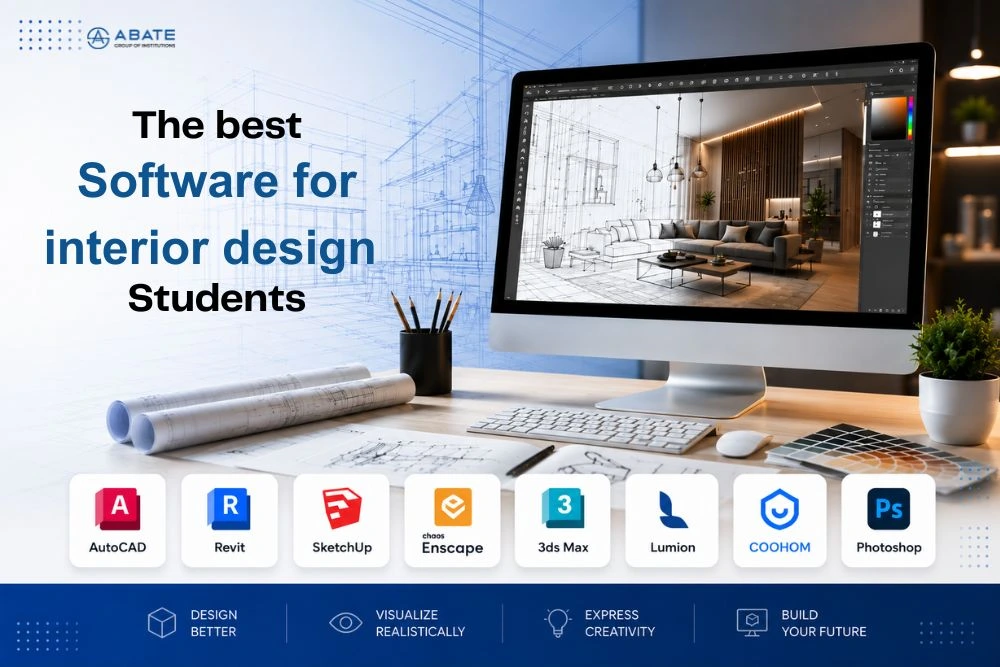
Interior designers also use specialised software to create floor plans, three-dimensional models, realistic renderings, and presentations. These tools help designers show clients how a proposed space may look before the work begins. Although software can make visual communication easier, students still need to understand design principles and how to use these tools effectively.
What If You Are Not Naturally Creative?
Some students worry about drawing, while others question whether they are creative enough to become interior designers. Creativity is not limited to artistic talent. It can also involve identifying problems, exploring alternatives, combining ideas, and finding better ways to use a space. Consider a small bedroom with limited storage. An interior designer might explore multifunctional furniture, vertical storage, suitable lighting, and a layout that makes the room feel more spacious. Developing this solution requires observation, planning, and problem-solving. Students can strengthen their creativity by observing different interiors, studying materials, exploring design styles, experimenting with layouts, and working on practical projects.
Skills That Matter Beyond Drawing
If you want to become an interior designer, there are several other skills worth developing.
Space Planning
Space planning involves organising furniture, circulation, storage, and other elements to make a room functional and comfortable. A good designer considers how people will move through and use the space before focusing on its appearance.
Colour and Material Selection
Understanding colours, textures, finishes, and materials helps designers create interiors that suit the purpose of a space and the preferences of its users.
Technical Knowledge
Interior designers need to understand dimensions, layouts, construction details, lighting, and how different design elements work together.
Communication Skills
Designers must explain their ideas clearly to clients, contractors, suppliers, and other professionals. Listening carefully and understanding client requirements are equally important.
Problem-Solving
Real projects often involve limitations related to space, budget, materials, or construction. Designers need to find practical solutions while maintaining the overall design intent.
Software Skills
Learning industry-relevant design software can help students prepare drawings, models, and visual presentations. These skills are particularly useful when communicating complex ideas.
Can You Learn Drawing During an Interior Design Course?
Yes. Students can improve their drawing skills through structured learning, demonstrations, assignments, and regular practice. An interior design course can introduce students to basic drawing techniques and gradually help them develop more advanced visual communication skills.
For beginners, a useful approach is to start with simple exercises:
- Sketch basic shapes and objects.
- Practise drawing furniture using simple forms.
- Observe the proportions of rooms and everyday objects.
- Learn the basics of perspective.
- Practise simple floor plans and layouts.
- Redraw spaces from photographs or references.
- Ask for feedback and work on areas that need improvement.
Consistency matters more than trying to create perfect sketches from the beginning. Students should focus on communicating their ideas clearly rather than comparing their early work with the finished drawings of experienced designers.
How Technology Helps Students Who Struggle With Drawing
Technology has created additional ways for interior designers to develop and communicate ideas. Design software allows students to create floor plans, arrange furniture, build 3D models, and produce visual presentations without relying entirely on hand-drawn illustrations. AI tools can also support early-stage brainstorming and visual exploration. They may help students explore different colour combinations, furniture arrangements, or interior styles. However, technology is not a complete replacement for design knowledge. Students still need to evaluate whether a concept is functional, suitable for the space, realistic within the budget, and appropriate for the client's needs. The strongest approach is to combine design fundamentals, drawing practice, software training, and practical experience.
What Can You Do to Improve Your Drawing Before Joining an Interior Design Course?
You do not need to master every drawing technique before beginning your studies. However, practising a few basic skills can help you feel more confident.
Start With Everyday Objects
Try sketching a chair, table, cupboard, or lamp. Focus on understanding basic shapes and proportions rather than adding every detail.
Observe Real Spaces
Look at how furniture is arranged in your home, a café, a classroom, or another familiar environment. Try making a simple sketch of the layout.
Explore Different Interior Styles
Study modern, traditional, minimalist, and other interior styles. Notice how colour, materials, furniture, and lighting contribute to the overall design.
Learn Basic Perspective
Perspective helps represent three-dimensional spaces on a two-dimensional surface. Even a basic understanding can make room sketches easier to interpret.
Practise Regularly
Short, consistent practice sessions can help you improve gradually. Keep your early sketches so you can see your progress over time.
How to Choose the Right Interior Design Course
If you are interested in interior design but lack confidence in drawing, look for a course that supports beginners and develops skills progressively.
Before choosing an institution, consider the following:
- Curriculum: Does it cover design fundamentals, drawing, space planning, materials, and technical knowledge?
- Faculty support: Are students guided through practical exercises and assignments?
- Software training: Does the programme introduce relevant design and visualisation tools?
- Practical projects: Will you have opportunities to apply what you learn?
- Site visits: Does the programme help students understand how designs are implemented in real spaces?
- Industry exposure: Are there opportunities for workshops, internships, or interaction with professionals?
- Portfolio development: Will you learn how to present your projects and design ideas?
A well-rounded learning experience can help students develop confidence while building the technical and creative skills required for the profession.
Learn Interior Design at Abate Group of Institutions
At Abate Group of Institutions, students pursuing an interior design course in Calicut, Kannur and Malappuram can benefit from an industry-focused learning approach that combines Ai-integrated education, industry software training, practical projects, international exposure, and placement assistance.
These learning opportunities help students strengthen their design knowledge and understand how creative concepts are applied in professional environments. For students who are interested in interior design but concerned about their drawing abilities, Abate provides a learning environment where they can develop their skills through practice, faculty guidance, and practical experience.
Frequently Asked Questions
1. Can I study interior design if I cannot draw?
Yes. You can study interior design even if you are not good at drawing. Drawing skills can be developed through practice, and interior design education also covers space planning, materials, technical knowledge, software, and problem-solving.
2. Do interior designers need to draw by hand?
Hand drawing is useful for sketching ideas and communicating concepts. However, designers also use technical drawings, digital design software, and 3D visualisation tools to present their work.
3. Is mathematics required for interior design?
Basic mathematical skills are useful for measurements, dimensions, proportions, area calculations, and budgeting. The level of mathematics required depends on the course and the type of work involved.
4. Can I become an interior designer if I am not artistic?
Yes. Artistic ability can be helpful, but professional interior design also depends on observation, practical thinking, technical knowledge, communication, and an understanding of how spaces function.
5. Which software should interior design students learn?
The appropriate software depends on the curriculum and career goals. Students may explore tools for technical drawings, 3D modelling, rendering, and presentations. Learning to use these tools alongside design fundamentals is important.
Conclusion
Not being good at drawing should not stop you from exploring a career in interior design. Drawing is a valuable skill, but it is not the only factor that determines whether someone can become a successful designer.
Interior design also requires creativity, space planning, technical understanding, communication, material knowledge, and problem-solving. Many of these abilities can be developed through education, regular practice, and practical exposure.
If you enjoy improving spaces, exploring design ideas, and finding creative solutions to everyday problems, interior design may be worth considering. You do not have to be a skilled artist before you start learning interior design. You need the willingness to learn, practise, and develop the skills that turn your ideas into functional spaces.