Will AI Replace Interior Designers? A Complete Guide
 July 31, 2026
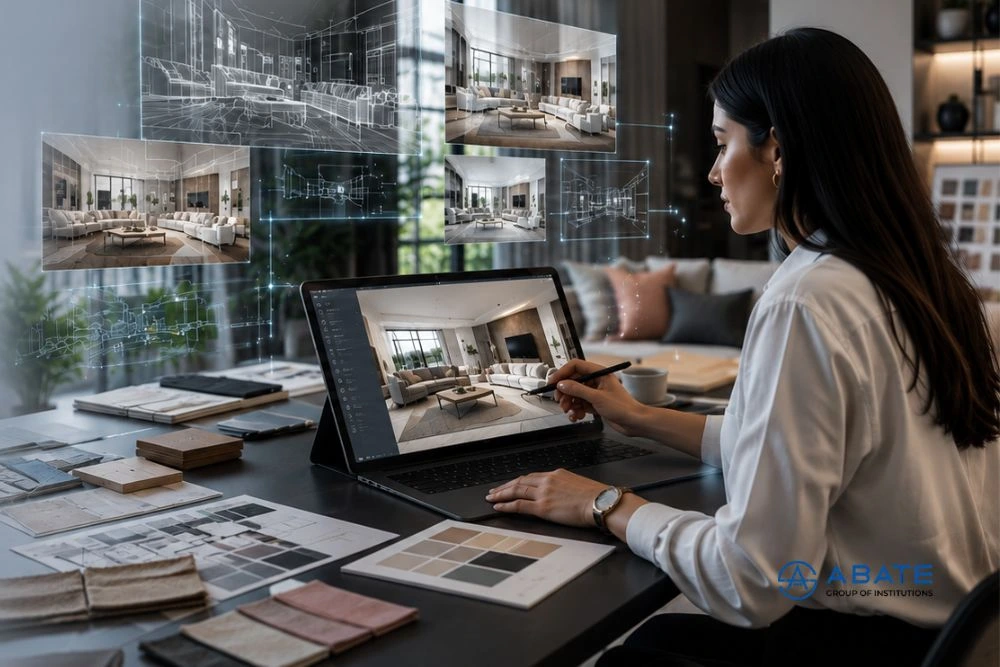
Artificial Intelligence (Ai) is transforming almost every industry, and interior design is no exception. From generating design concepts and creating realistic visualizations to suggesting colour palettes and optimizing layouts, Ai-powered tools are changing how designers approach their work.
This has led many students and aspiring designers to ask an important question: Will Ai replace interior designers?
The short answer is no, not completely. Ai is more likely to become a powerful tool that supports interior designers rather than replace them. The future of interior design will involve professionals who know how to combine human creativity, design knowledge, technical expertise, and Ai technology.
Let's understand how Ai is changing interior design and what this means for the future of the profession.
What is Ai in Interior Design?
Ai in interior design refers to using artificial intelligence-powered tools to assist with different stages of the design process.
Depending on the tool, Ai can help designers:
- Generate initial design concepts
- Suggest furniture arrangements
- Create mood boards
- Recommend colour combinations
- Visualize different interior styles
- Produce 3D design concepts
- Optimize space utilization
- Generate realistic renders
- Explore material combinations
Instead of replacing the designer's role, these technologies can make certain parts of the design process faster and more efficient.
Why Do People Think Ai Will Replace Interior Designers?
The concern is understandable because Ai can now produce impressive interior concepts within seconds. A designer can provide a room image or a written description and receive several visual concepts almost instantly.
Ai can also automate some repetitive tasks, which may make it appear that fewer designers will be required.
However, creating an attractive image is only one part of interior design. A professional project involves understanding the client's lifestyle, budget, functional requirements, site conditions, materials, construction limitations, safety considerations, and many other factors.
These responsibilities require human judgment and professional expertise.
What Can AI Do in Interior Design?
Ai can support designers in several areas of their work.
1. Generate Design Concepts
Ai can quickly create multiple concepts based on a particular style, colour palette, room type, or client preference.
For students, this can be useful during the brainstorming stage because they can explore different possibilities before developing their final concept.
2. Create Visualizations
Ai-powered visualization tools can transform ideas into realistic images, helping designers communicate concepts more effectively.
For example, a designer can experiment with:
- Modern interiors
- Minimalist spaces
- Luxury interiors
- Traditional designs
- Sustainable interiors
- Contemporary commercial spaces
This can make the concept development process more interactive.
3. Assist With Space Planning
Some Ai-enabled tools can help analyze room dimensions and suggest possible furniture arrangements or layouts.
However, the designer still needs to evaluate whether the suggested layout is actually practical and suitable for the client's needs.
4. Explore Colours and Materials
Ai can generate different colour combinations and material suggestions based on a particular design style.
This can help designers explore options more efficiently while developing a concept.
5. Automate Repetitive Tasks
Ai can assist with certain repetitive activities, allowing designers to spend more time on creative thinking, client interaction, and project development.
This can improve productivity without eliminating the need for professional designers.
What Ai Cannot Replace in Interior Design
Despite its capabilities, AI has important limitations.
1. Understanding Human Emotions and Preferences
Interior design is deeply connected to people's lifestyles and emotions.
A designer needs to understand questions such as:
- How does the client use the space?
- What atmosphere do they want?
- What are their personal preferences?
- What are their lifestyle requirements?
- How should the space make them feel?
Ai can provide suggestions, but human interaction and empathy remain essential.
2. Creative Direction
Ai can generate design possibilities, but designers provide the creative direction behind a project.
A professional designer decides which concept works best and how different elements should be combined into a cohesive space.
3. Real-World Site Understanding
An Ai-generated design may look impressive on a screen but may not work on an actual construction site.
Interior designers need to consider:
- Actual measurements
- Structural limitations
- Electrical points
- Plumbing
- Natural lighting
- Ventilation
- Material availability
- Construction feasibility
- Budget constraints
These factors require professional evaluation.
4. Client Communication
Interior designers regularly communicate with clients, architects, contractors, suppliers, and other professionals.
Understanding expectations, explaining design decisions, negotiating changes, and managing feedback require interpersonal skills that Ai cannot fully replace.
5. Project Execution
Designing a concept is only the beginning. A professional interior designer must often coordinate with contractors and suppliers to ensure the final space matches the approved design.
This requires decision-making, supervision, communication, and problem-solving in the real world.
Ai vs Interior Designers: Who is Better?
Rather than viewing Ai and interior designers as competitors, it is more useful to consider them as complementary.
|
Ai |
Interior Designer |
|
Generates ideas quickly |
Develops creative design concepts |
|
Processes large amounts of information |
Understands individual client requirements |
|
Creates visual concepts |
Evaluates practical feasibility |
|
Automates repetitive tasks |
Makes professional decisions |
|
Suggests colours and materials |
Selects materials based on project needs |
|
Helps optimize workflows |
Manages clients and project teams |
|
Supports visualization |
Oversees real-world implementation |
The most successful professionals will likely be those who can use Ai effectively while retaining strong design fundamentals.
Will Ai Reduce the Demand for Interior Designers?
Ai may change some responsibilities within the profession, but that does not necessarily mean interior designers will disappear.
Instead, the role of an interior designer may evolve.
Designers may spend less time on repetitive tasks and more time on:
- Creative direction
- Client consultation
- Design strategy
- Problem-solving
- Project management
- Material selection
- Site coordination
- Sustainable design
- Design supervision
This shift could make the profession more technology-driven while keeping human expertise at its core.
Ai Will Create New Opportunities for Interior Designers
Technology doesn't only eliminate certain tasks; it can also create new roles and opportunities.
Interior designers with Ai and digital skills may explore areas such as:
AI-Assisted Interior Designer
Professionals who use Ai tools to accelerate concept development and visualization.
3D Visualization Specialist
Designers specializing in realistic digital representations of interior spaces.
Virtual Interior Design Consultant
Professionals providing design services remotely using digital platforms.
Digital Design Specialist
Designers combining traditional design principles with advanced software and emerging technologies.
Ai Design Workflow Consultant
Professionals who help design firms integrate Ai tools into their existing workflows.
Why Interior Design Students Should Learn Ai
Students entering the profession should not be afraid of Ai. Instead, they should learn how to use it responsibly and effectively.
AI-integrated learning can help students:
- Generate more design ideas
- Experiment with different styles
- Improve visualization skills
- Work more efficiently
- Understand emerging technologies
- Develop future-ready skills
- Build stronger presentations
However, Ai should complement, not replace, fundamental design education.
Skills Interior Designers Will Need in the Ai Era
As technology develops, certain human skills will become even more valuable.
Creativity
Designers need to develop original ideas rather than simply reproduce Ai-generated concepts.
Critical Thinking
Professionals must evaluate whether Ai-generated suggestions are functional, realistic, and appropriate.
Communication
Strong communication remains essential for understanding clients and working with project teams.
Technical Knowledge
Knowledge of design software, materials, construction, lighting, and space planning remains fundamental.
Ai Literacy
Understanding how Ai tools work and knowing when to use them can give designers a significant advantage.
Problem-Solving
Real-world projects involve unexpected challenges that require human judgment and practical solutions.
How Ai Can Benefit Interior Design Students
Students can use Ai as a learning assistant rather than simply relying on it to generate finished designs.
For example, Ai can help students:
- Brainstorm design concepts
- Compare different styles
- Explore colour combinations
- Generate mood-board ideas
- Understand emerging trends
- Experiment with spatial concepts
- Improve project presentations
However, students should always develop their own design thinking and understand the reasoning behind every design decision.
Will Ai-Generated Designs Replace Human Creativity?
Ai can produce visually impressive designs, but visual appeal alone does not make a successful interior.
A good interior design should respond to:
- Human needs
- Functionality
- Comfort
- Safety
- Culture
- Lifestyle
- Budget
- Environmental considerations
Human designers bring context and meaning to a project. Ai can generate possibilities, but the designer decides how those possibilities should be used.
The Future of Interior Design
The future of interior design is likely to be a combination of human creativity and artificial intelligence.
Instead of asking whether Ai will replace designers, a better question is:
How can designers use Ai to become more creative, efficient, and competitive?
Future designers may work with Ai-powered software throughout the design process, from initial concept development to visualization and project presentation.
Those who learn to adapt to these technologies while maintaining strong fundamental design skills will be better prepared for the changing industry.
Why Ai-Integrated Education Matters
Interior design education needs to evolve alongside the profession. Students should learn not only traditional design principles but also the technologies shaping modern practice.
An AI-integrated curriculum can introduce students to:
- Ai-assisted design
- Digital visualization
- 3D modelling
- Industry-standard design software
- Modern presentation techniques
- Technology-driven workflows
This gives students a stronger foundation for entering an increasingly digital industry.
Why Choose Abate Group of Institutions for Ai-Integrated Interior Design Education?
At Abate Group of Institutions, the interior design institute in Calicut, Malappuram, and Kannur, the Interior Design program combines an industry-focused curriculum with Ai-integrated learning and industry software training. Students gain opportunities to develop creative and technical skills through practical projects, modern design tools, and exposure to evolving industry practices.
The program also provides global exposure through international industrial visits, including opportunities to explore design and manufacturing environments in China, Hong Kong, and Singapore. Along with practical learning and internship opportunities, placement assistance helps students prepare for their professional careers.
This future-focused approach helps aspiring designers understand how technology can support creativity while developing the human skills that remain essential to successful interior design.
How Students Can Prepare for an Ai-Driven Interior Design Career
If you are planning to pursue interior design, consider developing the following combination of skills:
1. Learn Design Fundamentals
Understand colour theory, space planning, materials, lighting, furniture, and design principles.
2. Develop Software Skills
Learn professional tools used for drafting, 3D modelling, rendering, and presentation.
3. Explore AI Tools
Understand how AI can support concept generation, visualization, and workflow efficiency.
4. Build a Portfolio
Showcase your original design thinking, technical drawings, 3D models, and practical projects.
5. Gain Practical Experience
Internships, site visits, workshops, and real-world projects can help you understand how design works beyond the classroom.
6. Keep Learning
Technology changes quickly. Successful designers need to continuously update their knowledge and skills.
Frequently Asked Questions
Will Ai completely replace interior designers?
No. Ai can automate and assist with several design tasks, but interior designers are still needed for creativity, client communication, professional judgment, site understanding, and project execution.
Is Ai useful for interior design students?
Yes. Ai can help students explore ideas, visualize concepts, experiment with different styles, and understand modern design workflows.
Should I learn Ai if I want to become an interior designer?
Yes. Learning Ai alongside traditional design principles and professional software can help you stay competitive as the industry evolves. If you are looking for one of the best interior design colleges in Kannur, Calicut, or Malappuram, join Abate.
Will Ai reduce interior design jobs?
AI may change some tasks performed by designers, but it is also likely to create new opportunities for professionals who understand both design and technology.
What skills should future interior designers develop?
Creativity, communication, critical thinking, technical knowledge, software proficiency, problem-solving, and Ai literacy will all be valuable.
Final Thoughts
Will Ai replace interior designers? Probably not. Instead, Ai is likely to change how interior designers work.
The future belongs to designers who can combine human creativity with technological capability. Ai can generate concepts, automate repetitive tasks, and improve visualization, but professional designers remain essential for understanding people, solving real-world problems, making informed decisions, and turning ideas into functional spaces.
For students, the rise of Ai should be viewed as an opportunity rather than a threat. Learning Ai, industry-standard software, and strong design fundamentals can help aspiring interior designers become more adaptable, productive, and future-ready.
The goal is not to compete with Ai. The goal is to learn how to use Ai to become a better interior designer.