Site Visit in Interior Design: Why Practical Exposure Matters for Students
 September 24, 2026
Interior design is not limited to creating attractive concepts on paper or working with design software. A successful interior project also depends on understanding how designs are implemented in real spaces.
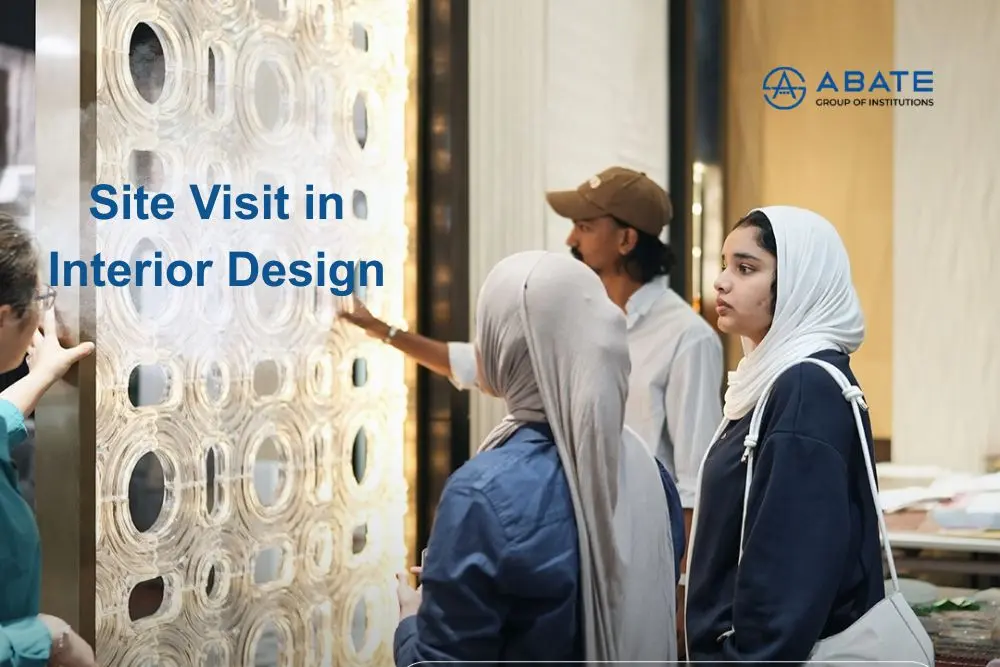
This is where site visits in interior design become important. By visiting construction sites, completed projects, material suppliers, furniture showrooms, and other relevant locations, students can see how the concepts they learn in the classroom are applied in real-world environments.
For interior design students, site visits can provide valuable practical exposure and help connect academic learning with professional practice.
What Is a Site Visit in Interior Design?
An interior design site visit is a practical learning experience where students visit an actual project site to observe different stages of the design and construction process.
During a site visit, students may observe:
- Space measurements
- Floor plans and layouts
- Material application
- Flooring and wall finishes
- Lighting installation
- Furniture placement
- Ceiling and partition work
- Electrical and plumbing considerations
- Construction methods
- Coordination between different professionals
Instead of learning these elements only through textbooks or classroom discussions, students get an opportunity to see them in an actual environment.
Why Are Site Visits Important for Interior Design Students?
1. Connecting Classroom Learning With Reality
Students learn many concepts during an interior design course, including space planning, materials, colour, lighting, furniture, and design principles. A site visit helps students understand how these concepts work when applied to a real project.
For example, a layout that looks straightforward on paper may require modifications because of structural elements, existing electrical points, plumbing, measurements, or other site conditions. This helps students understand that interior design involves both creative thinking and practical problem-solving.
2. Understanding Real Measurements and Space
Working with actual spaces provides a different experience from studying plans or digital models.
Students can observe how dimensions affect:
- Furniture placement
- Movement within a room
- Storage
- Lighting
- Circulation
- Accessibility
- Overall functionality
This practical understanding can help students make more informed design decisions.
3. Learning About Materials
Interior design students work with a wide range of materials. Seeing them physically can help students understand their appearance, texture, finish, application, and suitability. A site visit may allow students to observe materials such as:
- Wood and wood-based products
- Tiles
- Glass
- Stone
- Laminates
- Paint finishes
- Fabrics
- Metal
- Ceiling materials
Understanding materials in a real environment can complement the theoretical knowledge students gain during their course.
4. Observing the Construction Process
A design becomes useful only when it can be successfully implemented.
Site visits can introduce students to the relationship between design and execution. They may observe how designers, contractors, electricians, carpenters, plumbers, and other professionals coordinate during a project. This can help students understand the importance of accurate drawings, measurements, material selection, timelines, and communication.
5. Developing Problem-Solving Skills
Real projects do not always progress exactly according to the original design. Unexpected site conditions may require changes to the layout, materials, lighting, furniture, or construction details. By observing these situations, students can begin to understand how professional designers evaluate problems and develop practical solutions. This kind of exposure can strengthen critical thinking and problem-solving skills.
6. Understanding Professional Responsibilities
Site visits can also give students an insight into what interior designers do beyond creating designs.
A professional designer may need to:
- Communicate with clients
- Coordinate with contractors
- Review site progress
- Check measurements
- Discuss materials
- Monitor design implementation
- Address project changes
- Ensure that the design is executed as planned
Seeing these responsibilities firsthand can give students a clearer understanding of the profession.
Site Visits and Interior Design Software
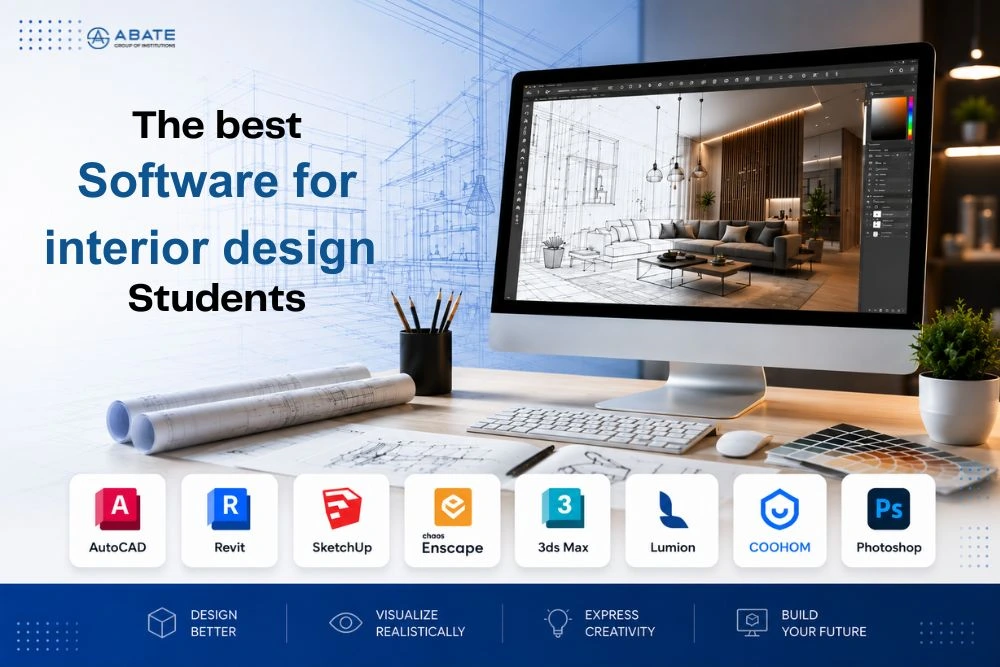
Design software is an important part of modern interior design education. Students can use software to create drawings, 3D models, renderings, and presentations.
However, digital models cannot completely represent the experience of being inside a physical space. Site visits allow students to compare what they see in drawings or 3D visualisations with actual spaces. This can help them better understand scale, proportion, materials, lighting, and construction details.
Combining software training with practical site exposure can therefore create a more complete learning experience.
What Should Students Observe During a Site Visit?
Students can make their site visits more useful by paying attention to specific details.
Space Planning
Observe how different areas are connected and how people move through the space.
Lighting
Look at natural and artificial lighting, fixture placement, shadows, and how lighting affects the overall atmosphere.
Materials
Observe the materials used and consider why they may have been selected for specific areas.
Furniture
Study the size, placement, functionality, and relationship between furniture pieces.
Finishes
Look at flooring, walls, ceilings, cabinetry, and other finishes.
Construction Details
Pay attention to how design elements are actually built and installed.
Site Challenges
Notice any practical limitations or changes that affect the original design.
Students can record their observations through notes, sketches, measurements where permitted, and photographs where photography is allowed.
International Industrial Visits: Learning Beyond the Local Environment
Practical exposure does not have to be limited to local project sites. International industrial visits can provide students with an opportunity to observe design, architecture, materials, construction, and industry practices in different environments.
At Abate Group of Institutions, the interior design colleges in Calicut, Kannur, and Malappuram, Interior Design students have opportunities for international industrial exposure through visits to destinations including China, Hong Kong, and Singapore.
These visits can introduce students to different approaches to design and the built environment while allowing them to experience new places and cultures.
Why International Exposure Matters in Interior Design
Exposure to Different Design Approaches
Different regions and countries have their own architectural styles, materials, planning approaches, and design influences. International exposure can help students observe these differences and broaden their understanding of interior design.
Understanding Global Trends
Visiting international destinations can give students an opportunity to see contemporary design applications and developments in the built environment. This can encourage students to explore new ideas rather than limiting their understanding to familiar design approaches.
Cultural Understanding
Interior spaces are influenced by culture, lifestyle, history, and local preferences. Experiencing different cultures can help students understand how these factors influence the way spaces are designed and used.
Learning Beyond the Classroom
An international industrial visit combines education with direct observation. Students can learn through places, projects, environments, and experiences that may not be possible to recreate completely inside a classroom.
China, Hong Kong and Singapore
Abate's international industrial visits include destinations such as China, Hong Kong, and Singapore. Each destination can offer students a different environment to observe and explore. From contemporary urban spaces to commercial developments and design-focused environments, international exposure can encourage students to look at interior design from a broader perspective.
The experience can also help students develop greater awareness of how design connects with architecture, technology, culture, materials, and modern lifestyles.
How Site Visits Can Help With Career Preparation
Site visits are not simply educational trips. They can contribute to the development of skills that are useful when students enter the professional world.
Through repeated practical exposure, students can develop a better understanding of:
- Real-world design processes
- Materials and finishes
- Site coordination
- Professional communication
- Space planning
- Construction requirements
- Problem-solving
- Industry expectations
These experiences can become valuable additions to a student's overall learning journey.
From Classroom Learning to Real-World Experience
Interior design education becomes more meaningful when students can connect theory, technology, creativity, and practical experience.
Classroom learning provides the foundation. Design software helps students visualise ideas. Projects allow them to apply their knowledge. Site visits show how those ideas work in real spaces. International industrial visits can then broaden their understanding of design beyond their immediate environment.
At Abate Group of Institutions, the Interior Design programme combines industry-focused learning with practical exposure, industry software training, Ai-integrated learning, international exposure, and other opportunities designed to help students understand the profession beyond textbooks.
Conclusion
A site visit in interior design gives students an opportunity to experience the profession from a practical perspective. It helps them understand how spaces are measured, designed, constructed, furnished, and finished.
For students, these experiences can strengthen their understanding of materials, space planning, construction, communication, and problem-solving.
International industrial visits can take this learning a step further by exposing students to different design environments and global perspectives.
Interior design is learned not only by studying spaces, but also by experiencing them. Combining classroom education with site visits, practical projects, software training, internships, and international exposure can help students develop a broader understanding of the interior design profession.