Career Opportunities for Optometry Graduates in the Middle East
 August 10, 2026
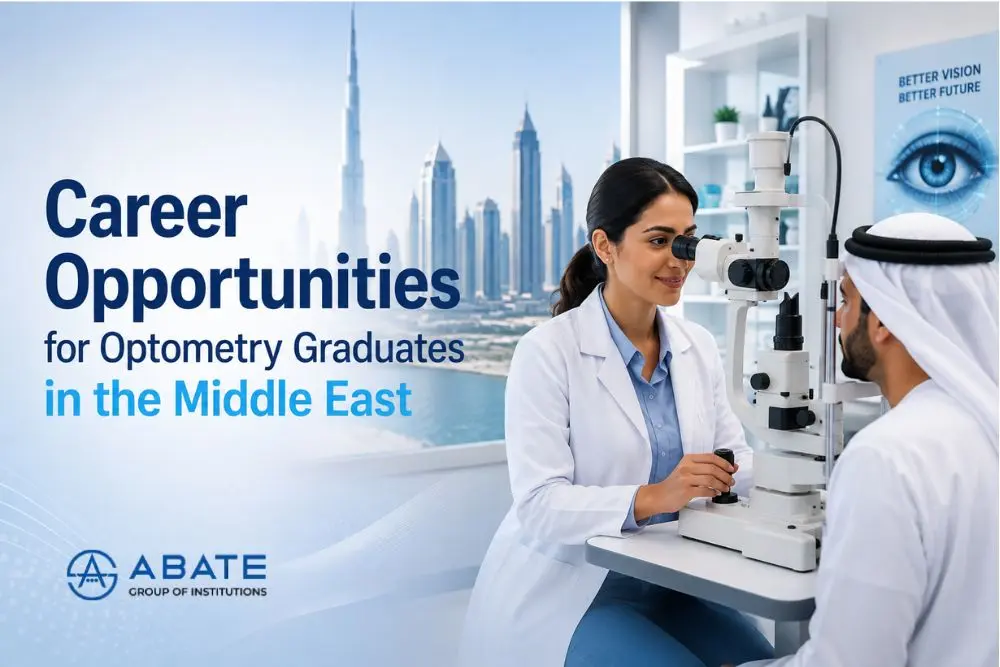
The demand for qualified eye care professionals is growing across the Middle East, creating promising career opportunities for optometry graduates. Countries such as the UAE, Saudi Arabia, Qatar, Oman, Kuwait, and Bahrain have well-developed healthcare and optical sectors that offer opportunities in hospitals, eye care centres, optical stores, clinics, and healthcare organisations.
For students completing a BSc Optometry or Bachelor of Optometry, the Middle East can be an attractive destination for building an international career. However, opportunities depend on factors such as educational qualifications, clinical experience, professional licensing requirements, and the specific regulations of each country.
This guide explores the career opportunities available to optometry graduates in the Middle East and explains how students can prepare for an international career.
Why Consider a Career in Optometry in the Middle East?
The Middle East has invested significantly in healthcare infrastructure and specialized medical services. Alongside hospitals and clinics, the region has a strong optical retail and eye care industry.
For optometry graduates, this can create opportunities to work in areas such as:
- Clinical optometry
- Optical retail
- Contact lens practice
- Vision assessment
- Pediatric vision care
- Low vision services
- Eye care centres
- Healthcare organizations
- Optical laboratories
The region can also provide professionals with exposure to multicultural workplaces and modern clinical environments.
Top Middle Eastern Countries for Optometry Careers
1. United Arab Emirates
The United Arab Emirates, particularly Dubai and Abu Dhabi, has a developed healthcare and optical sector.
Optometry professionals may find opportunities in:
- Eye hospitals and clinics
- Optical chains
- Vision centres
- Contact lens services
- Retail optical practices
- Healthcare organizations
Professionals working in the UAE generally need to meet the applicable licensing requirements before practicing.
2. Saudi Arabia
Saudi Arabia has a large healthcare sector and continues to develop medical infrastructure across its major cities.
Optometry graduates can explore opportunities in:
- Hospitals
- Eye care centres
- Optical clinics
- Retail optical businesses
- Vision care services
The country can be particularly attractive to professionals who want experience working in large healthcare organizations.
3. Qatar
Qatar has developed healthcare facilities and specialized medical services, creating opportunities for qualified eye care professionals.
Optometrists may work in clinical settings, optical practices, and other vision-care environments depending on their qualifications and professional licensing.
4. Oman
Oman offers opportunities within hospitals, clinics, optical centres, and retail optical businesses.
Graduates with clinical experience and strong technical skills may find opportunities across different areas of eye care.
5. Kuwait
Kuwait's healthcare and optical sectors provide opportunities for qualified professionals, particularly in clinical and optical settings.
Candidates should check the current professional registration and licensing requirements before applying for positions.
6. Bahrain
Bahrain also has opportunities within its healthcare and optical sectors. Optometry graduates can explore positions in eye care facilities, optical businesses, and related healthcare services.
Career Opportunities for Optometry Graduates
An optometry qualification can open the door to several career paths in the Middle East.
Clinical Optometrist
Clinical optometrists conduct vision assessments, perform eye examinations, identify refractive errors, and provide appropriate vision care within their professional scope.
Clinical experience is particularly valuable for graduates who want to work in hospitals and specialized eye care centres.
Optical Optometrist
Optometrists can also work in optical retail environments, helping patients select suitable spectacles and contact lenses based on their vision requirements.
This role combines clinical knowledge with patient communication and product knowledge.
Contact Lens Specialist
Contact lens practice is another area where optometry graduates can develop specialized skills.
Professionals may work with different types of contact lenses and help patients with lens selection, fitting, and follow-up care within their scope of practice.
Pediatric Optometry
Children may require specialized vision assessment and management. Optometry professionals with additional training in pediatric eye care can explore opportunities related to children's vision.
Low Vision Services
Optometrists can also work with patients who have reduced vision and require appropriate visual aids or rehabilitation support.
This area can be particularly valuable for professionals interested in specialized patient care.
Optical Industry
Optometry graduates can explore opportunities beyond clinical practice.
Possible roles include:
- Optical consultant
- Product specialist
- Clinical support specialist
- Optical sales professional
- Technical consultant
These roles can be suitable for graduates who are interested in combining optometry knowledge with the optical industry.
What Qualifications Do You Need to Work as an Optometrist in the Middle East?
Having an optometry degree is an important starting point, but a degree alone does not automatically authorise professional practice in every Middle Eastern country.
Requirements vary by country and regulatory authority. Depending on the destination, applicants may need to provide:
- Recognized optometry qualification
- Academic transcripts
- Internship or clinical training records
- Professional experience
- Identity and other supporting documents
- Verification of educational credentials
- Professional registration or licensing
- Examination or assessment, where applicable
Therefore, students should always check the current requirements of the relevant healthcare authority before applying.
Why Clinical Experience Matters
For graduates planning to work abroad, practical experience can be an important advantage.
Clinical training helps students develop skills in:
- Comprehensive eye examinations
- Refraction
- Contact lens practice
- Patient communication
- Basic diagnostic procedures
- Clinical documentation
- Patient management
Experience gained through internships and clinical placements can also help graduates become more confident in professional environments.
Skills That Can Improve Your Middle East Career Prospects
A strong academic qualification is only one part of becoming a successful optometry professional.
Clinical Skills
Strong clinical knowledge and practical experience can improve your ability to work confidently with patients.
Communication Skills
Optometrists interact with patients from different backgrounds. Clear and professional communication is therefore essential.
Contact Lens Skills
Knowledge of contact lens fitting and management can be valuable in both clinical and optical settings.
Diagnostic Knowledge
Understanding modern diagnostic procedures and equipment can help graduates adapt to technologically advanced eye care environments.
Digital Skills
Modern healthcare increasingly relies on digital systems, electronic records, and advanced diagnostic technologies.
Professional Adaptability
Working abroad often means adapting to different workplace cultures, healthcare systems, and patient expectations.
Can Indian Optometry Graduates Work in the Middle East?
Yes, Indian optometry graduates can explore career opportunities in Middle Eastern countries. However, eligibility depends on the qualification, professional experience, licensing requirements, and regulations of the destination country.
Students should not assume that completing a BSc Optometry automatically provides a license to practice abroad. Instead, they should research the requirements of the specific country and regulatory authority where they intend to work.
How to Prepare for an Optometry Career Abroad
Students can start preparing for an international career while they are still studying.
1. Choose a Recognized Optometry Program
Begin with a properly structured optometry education that provides strong theoretical and clinical foundations.
2. Focus on Clinical Training
Take internships, clinical postings, and practical training seriously. Real-world experience can make a significant difference when applying for jobs.
3. Develop Technical Skills
Become familiar with modern optometric procedures, equipment, and clinical workflows.
4. Improve Communication Skills
Develop professional English communication and patient interaction skills.
5. Build Professional Experience
Where required, gain relevant clinical experience after graduation before applying for international positions.
6. Research Licensing Requirements
Check the latest requirements of the relevant authority in your chosen country before beginning the application process.
Importance of Internships for Aspiring Optometrists
Internships provide an opportunity to apply classroom knowledge in real clinical environments.
During clinical training, students can gain exposure to:
- Patient interaction
- Vision assessment
- Refraction
- Contact lenses
- Clinical procedures
- Patient records
- Professional teamwork
This practical exposure can help graduates transition more confidently into professional roles.
Why Choose Abate Group of Institutions for Optometry?
For students planning an international optometry career, the quality of their education and clinical exposure is important.
Abate Group of Institutions, the best optometry colleges in Kerala and Tamil Nadu, focuses on combining academic learning with practical and clinical exposure. Students pursuing optometry programs can develop their theoretical knowledge, clinical skills, patient communication abilities, and understanding of modern eye care practices.
The institution's focus on practical learning can help students build a strong foundation for career opportunities in India and explore professional pathways abroad.
Many students who studied optometry at Abate have gone on to pursue careers outside India, making international career planning an important consideration for aspiring optometry students.
Benefits of Building an International Optometry Career
Working in the Middle East can provide graduates with several professional benefits, including:
International Work Experience
Working in another country can provide exposure to different healthcare systems and professional practices.
Multicultural Environment
Optometrists may interact with patients and colleagues from diverse cultural backgrounds.
Professional Development
International work experience can help professionals expand their clinical and communication skills.
Exposure to Modern Eye Care
Many healthcare facilities use advanced technologies and modern clinical workflows.
Career Growth
With the appropriate qualifications, experience, and professional licensing, optometrists can explore different career pathways within the healthcare and optical sectors.
Things to Consider Before Moving Abroad
Working abroad can be an exciting opportunity, but students should carefully evaluate several factors before making a decision.
Licensing
Always confirm whether your qualification meets the requirements of the destination country's regulatory authority.
Experience Requirements
Some positions may require professional experience in addition to an academic qualification.
Cost of Living
Compare salary expectations with accommodation, transportation, and other living expenses.
Employment Contract
Understand your job role, working hours, benefits, contract duration, and other conditions before accepting an offer.
Professional Scope
The responsibilities and permitted scope of practice can vary between countries.
Frequently Asked Questions
Can BSc Optometry graduates work in Dubai?
BSc Optometry graduates can explore opportunities in Dubai, subject to meeting the applicable professional licensing and employment requirements.
Which Middle Eastern countries offer opportunities for optometrists?
Countries including the UAE, Saudi Arabia, Qatar, Oman, Kuwait, and Bahrain have healthcare and optical sectors where qualified optometry professionals may find opportunities.
Is work experience required to work abroad as an optometrist?
Requirements vary by country and employer. Some positions may accept fresh graduates, while others require relevant clinical experience.
Is an optometry degree enough to work abroad?
Not necessarily. Graduates may need professional registration or a license from the relevant regulatory authority in the country where they wish to practice.
What skills should optometry students develop for international careers?
Clinical expertise, communication, contact lens skills, knowledge of diagnostic procedures, patient management, and adaptability can all be valuable for international careers.
Final Thoughts
A career in optometry can extend well beyond India. With growing healthcare services and optical sectors across the Middle East, qualified professionals can explore opportunities in countries such as the UAE, Saudi Arabia, Qatar, Oman, Kuwait, and Bahrain.
However, international career planning requires more than earning a degree. Strong clinical training, practical experience, professional skills, and an understanding of country-specific licensing requirements are essential.
For students interested in building a global career, choosing a quality optometry program and gaining meaningful clinical exposure can provide a strong starting point. With the right preparation and continuous professional development, optometry graduates can explore rewarding career opportunities in the Middle East and other international markets.