Can Interior Designers Work Abroad? A Complete Guide to Global Career Opportunities
 July 18, 2026

Interior design is no longer limited by geographical boundaries. With the rapid growth of real estate, hospitality, commercial spaces, and luxury residential projects around the world, skilled interior designers are in demand across many countries. As design trends become more global and technology enables seamless collaboration, interior designers now have exciting opportunities to build successful careers internationally.
If you're planning to pursue an interior design course, one of the questions you may have is, "Can interior designers work abroad?" The answer is yes. With the right education, practical experience, technical skills, and a strong portfolio, interior designers can explore rewarding career opportunities in countries across the Middle East, Europe, North America, Australia, and Asia.
This guide explains the global career prospects, required qualifications, popular destinations, and how you can prepare for an international career in interior design.
Is Interior Design a Global Career?
Interior design is recognised as a global profession because every country requires skilled professionals to design functional, aesthetically pleasing, and sustainable spaces. Whether it's residential homes, luxury hotels, shopping malls, hospitals, offices, or educational institutions, interior designers play a vital role in shaping modern environments.
As urbanisation and infrastructure development continue worldwide, the demand for qualified interior designers is steadily increasing.
Can Interior Designers Work Abroad?
Yes. Many countries actively recruit interior designers for residential, commercial, hospitality, retail, healthcare, and workplace design projects.
Interior designers with strong technical knowledge, practical experience, and proficiency in industry-standard software often have better opportunities to secure international jobs.
In addition to working with design firms, many professionals also take up freelance projects for clients across different countries through online collaboration.
Why is the Demand for Interior Designers Increasing Globally?
Several factors contribute to the growing demand for interior designers worldwide.
Urban Development
Rapid construction of homes, offices, hotels, and commercial buildings has increased the need for professional interior designers.
Hospitality Industry Growth
Luxury hotels, resorts, restaurants, and entertainment spaces constantly require skilled designers to create attractive and functional interiors.
Modern Workspaces
Companies increasingly invest in well-designed offices that improve employee productivity and workplace experience.
Smart Homes and Sustainable Design
Modern clients seek eco-friendly, technology-enabled interiors, creating opportunities for designers with knowledge of sustainable and smart design solutions.
Luxury Residential Projects
Homeowners are investing more in personalised, premium interior designs, increasing demand for qualified professionals.
Top Countries Where Interior Designers Can Work
United Arab Emirates (UAE)
The UAE is one of the most popular destinations for interior designers due to its thriving construction and hospitality industries.
Career opportunities include:
- Residential projects
- Luxury villas
- Hotels and resorts
- Commercial interiors
- Retail spaces
Cities like Dubai and Abu Dhabi regularly hire experienced interior designers.
Qatar
Qatar's ongoing infrastructure and real estate development create opportunities for professionals in interior design, especially in commercial and hospitality sectors.
Saudi Arabia
Large-scale urban development projects, smart cities, and tourism initiatives have significantly increased demand for interior designers in Saudi Arabia.
Singapore
Singapore is known for its modern architecture and innovative interior design industry. Designers work on residential, commercial, and sustainable design projects.
Australia
Australia offers opportunities in residential, workplace, hospitality, healthcare, and educational interior design.
Professionals with strong portfolios often find rewarding career paths.
Canada
Canada's expanding housing market and commercial infrastructure support a growing demand for interior designers.
United Kingdom
Interior designers in the UK work across luxury residential, hospitality, heritage restoration, retail, and office design projects.
By choosing an interior design course in Kannur, Calicut, or Malappuram, you will get international industrial visit opportunities. This is a plus point if you are seeking a job abroad.
Career Opportunities Abroad
Interior designers can pursue various specialized roles, including:
- Residential Interior Designer
- Commercial Interior Designer
- Hospitality Designer
- Retail Space Designer
- Furniture Designer
- Workplace Designer
- Lighting Designer
- Exhibition Designer
- Space Planner
- Interior Design Consultant
- Visual Merchandiser
- Design Project Coordinator
Many professionals eventually establish their own design studios or consultancy firms.
Skills Required to Work Abroad
International employers look for candidates with a combination of creative, technical, and communication skills.
Important skills include:
Creative Thinking
Developing innovative design concepts that meet client expectations.
Technical Knowledge
Understanding materials, construction methods, lighting, furniture, and building regulations.
Software Proficiency
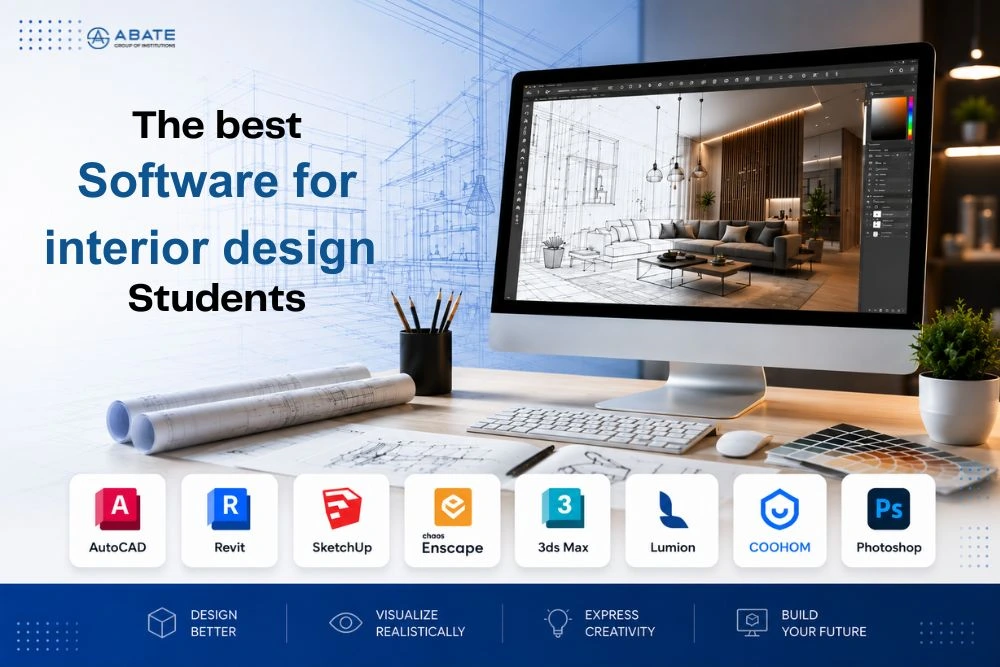
Knowledge of professional software such as:
- AutoCAD
- SketchUp
- Autodesk Revit
- 3ds Max
- Photoshop
- V-Ray
- Lumion
These tools are widely used by design firms around the world.
Communication Skills
Interior designers frequently interact with clients, architects, engineers, and contractors. Strong communication skills are essential.
Problem-Solving Ability
Every project presents unique challenges requiring practical and creative solutions.
Importance of Building a Strong Portfolio
A portfolio is one of the most important tools for securing international opportunities.
A good portfolio should include:
- Residential projects
- Commercial designs
- 3D visualizations
- Technical drawings
- Concept development
- Material boards
- Lighting plans
Employers often evaluate portfolios before scheduling interviews.
Why Practical Training Matters
Practical experience significantly improves employability.
Students who participate in:
- Studio projects
- Live design assignments
- Site visits
- Industry workshops
- Internships
gain valuable exposure that prepares them for professional work environments.
Real-world experience also strengthens portfolios.
Does Learning AI and Design Software Help?
Absolutely.
Modern design firms increasingly use AI-assisted design tools and advanced visualization software to improve efficiency.
Students familiar with:
- AI-integrated workflows
- BIM technology
- 3D rendering
- Virtual visualization
often gain a competitive advantage in international recruitment. At Abate Group of Institutions, a leading interior design institute in Malappuram, Calicut, and Kannur, students gain hands-on experience in Interior Design using AI-powered learning and industry-standard design software.
Can Interior Designers Work as Freelancers Internationally?
Yes.
Many interior designers work remotely with clients across different countries.
Freelancing opportunities include:
- Residential design consultation
- 3D visualization
- Furniture layout planning
- Space planning
- Virtual interior design
- Design presentations
Technology has made global collaboration easier than ever before.
How to Prepare for an International Career
Students can improve their chances of working abroad by following these steps:
Choose a Quality Interior Design Program
Select an institution that emphasizes practical learning, industry exposure, and modern technology.
Learn Professional Software
Software expertise is one of the most valued skills in the design industry.
Complete Internships
Internships provide practical knowledge and industry experience.
Build a Strong Portfolio
Showcase your best academic and practical projects.
Stay Updated
Follow international design trends, sustainability practices, and emerging technologies.
Improve Communication Skills
Good communication helps when working with multicultural teams and international clients.
Why Choose Abate Group of Institutions for Interior Design?
A successful international career begins with quality education.
The interior design course in Calicut, Kannur, and Malappuram at Abate Group of Institutions prepares students for the evolving global design industry through a combination of creativity, technology, and practical learning.
Students benefit from:
- Industry-focused curriculum
- AI-integrated learning
- Industry software training
- Practical studio projects
- Experienced faculty
- International industrial visits to China, Hong Kong, and Singapore
- Internship opportunities
- Placement assistance
These experiences help students develop technical expertise, global design awareness, and the confidence required to build successful careers both in India and abroad.
Final Thoughts
So, can interior designers work abroad? The answer is a definite yes. With the growing demand for skilled professionals worldwide, interior design offers exciting opportunities across residential, commercial, hospitality, healthcare, and retail sectors.
Success in the international job market depends on more than creativity. It requires strong technical knowledge, practical experience, software proficiency, and a well-developed portfolio. Students who invest in quality education and continuously upgrade their skills can build rewarding careers in countries around the world.
Whether your goal is to work with a leading design firm, contribute to landmark international projects, or establish your own global design practice, interior design offers a career without borders. Starting with the right education and industry exposure can open doors to opportunities that extend far beyond India.