BSc Optometry vs BSc Radiology – Which Course is Better?
 March 22, 2026
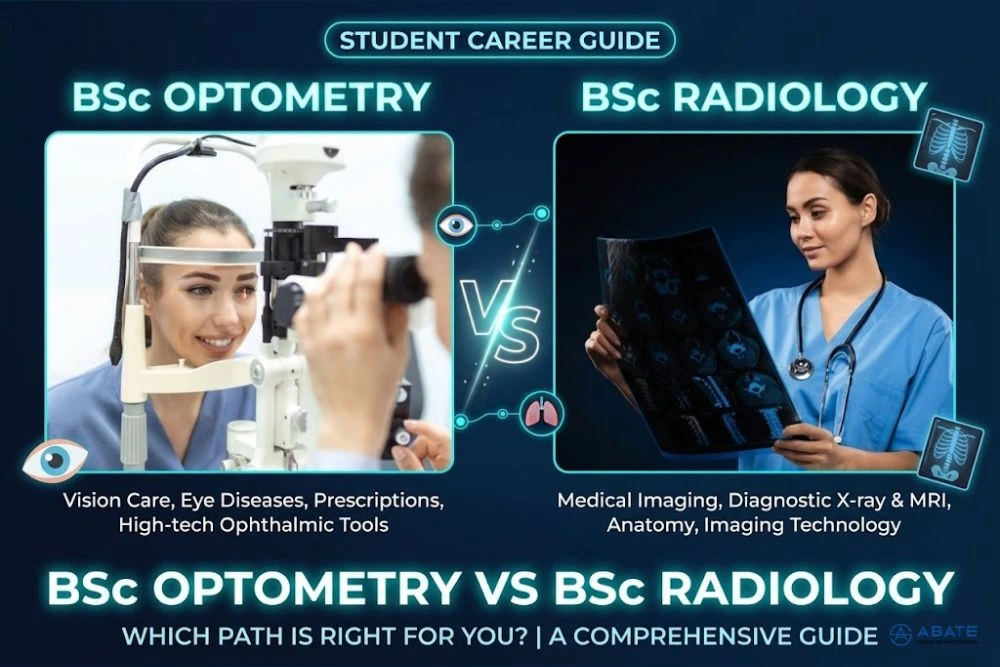
Choosing the right course after 12th can feel confusing, especially for students interested in the healthcare field. Among the many options available, BSc Optometry and BSc Radiology are two popular choices that offer promising career opportunities.
Both courses belong to the medical and healthcare domain, but they differ significantly in terms of study focus, career roles, and future scope. This guide will help you understand the key differences between BSc Optometry and BSc Radiology so you can make an informed decision based on your interests and career goals.
What is BSc Optometry?
BSc Optometry is a healthcare program that focuses on eye care and vision science. It prepares students to become optometrists who diagnose and manage vision problems and eye-related conditions.
Key Areas of Study
- Eye anatomy and physiology
- Visual optics
- Ocular diseases
- Contact lenses
- Binocular vision
- Pediatric and geriatric optometry
Students also gain clinical training in eye testing, vision correction, and patient care.
Career Roles
- Optometrist
- Vision therapist
- Clinical optometrist
- Optical consultant
- Pediatric optometrist
Optometry is ideal for students who are interested in patient interaction and specialized healthcare.
What is BSc Radiology?
BSc Radiology focuses on medical imaging technology used to diagnose diseases. It trains students to operate imaging equipment and assist doctors in interpreting medical scans.
Key Areas of Study
- Radiographic techniques
- X-ray, CT scan, and MRI
- Radiation physics
- Imaging procedures
- Patient positioning and safety
This course is more technical and equipment-oriented compared to optometry.
Career Roles
- Radiology technician
- MRI technician
- CT scan technician
- Radiographer
- Imaging specialist
Radiology is suitable for students interested in technology and diagnostic imaging.
BSc Optometry vs BSc Radiology: Key Differences
1. Nature of Work
- Optometry: Focuses on eye care, vision correction, and patient interaction.
- Radiology: Focuses on operating imaging machines and assisting in diagnosis.
2. Patient Interaction
- Optometry: High level of direct patient interaction.
- Radiology: Limited interaction; more technical work.
3. Work Environment
- Optometry: Eye hospitals, clinics, optical stores.
- Radiology: Hospitals, diagnostic centres, imaging labs.
4. Skill Requirements
- Optometry: Communication skills, observation, and patient care.
- Radiology: Technical skills, machine handling, accuracy.
5. Career Growth
- Optometry: Opportunities for specialisation (pediatric, low vision, contact lenses) and even private practice.
- Radiology: Growth into advanced imaging specialisation and senior technician roles.
6. Course Focus
- Optometry: Vision science and eye healthcare.
- Radiology: Diagnostic imaging and medical technology.
Which Course Should You Choose?
The choice between BSc Optometry and BSc Radiology depends on your interests and career goals.
Choose BSc Optometry if you:
- Enjoy interacting with patients
- Are interested in eye care and vision science
- Want a career with clinical practice opportunities
- Prefer a balance of science and patient care
You can also read why choose optometry as a career.
Choose BSc Radiology if you:
- Are interested in medical imaging technology
- Prefer working with machines and equipment
- Enjoy technical and diagnostic roles
- Want to work in hospital-based environments
Career Scope and Future Opportunities
Both optometry and radiology offer strong career prospects in the healthcare sector.
Scope of Optometry
- Increasing demand due to rising screen usage
- Opportunities in hospitals, clinics, and optical chains
- Potential to start independent practice
- Growing fields like pediatric optometry and tele-optometry
Scope of Radiology
- High demand in hospitals and diagnostic centers
- Growth with advanced imaging technologies
- Opportunities in specialized imaging fields
Both fields are stable and offer long-term career growth.
Role of the Right Institution
Choosing the right institution is just as important as choosing the right course. A good institute provides proper clinical training, experienced faculty, and practical exposure.
Institutions like Abate Group of Institutions offer structured healthcare programs, including optometry courses in Kerala and Chennai, with a focus on both theoretical knowledge and hands-on clinical training. Such environments help students build confidence and gain real-world experience, which is essential in the healthcare field.
Final Thoughts
Both BSc Optometry and BSc Radiology are excellent career options after 12th for students interested in the medical field. While optometry focuses on eye care and patient interaction, radiology is centred around diagnostic imaging and technology.
The right choice depends on your personal interests, strengths, and career goals. If you enjoy working closely with patients and want to specialise in eye care, optometry may be the right path. If you are more interested in technology and diagnostic tools, radiology could be a better fit.
Take time to evaluate your preferences, explore course details, and choose a path that aligns with your long-term vision.